Roe deer, fallow deer and red deer are the three deer species that most Danish hunters should be able to distinguish from each other. For an experienced hunter, the differences seem obvious, but at a long distance, in poor light or when only part of the animal is visible, identification can be more challenging.
It is also important to use the terms correctly. “Roe deer”, “fallow deer” and “red deer” are often used as if they were three directly parallel terms, but red deer is actually the name of the male of the red deer species. The species is called red deer.
Here you will find a practical comparison of size, antlers, tail, rump patch, behavior, rut and tracks.
The short answer
If you only need to remember the main rule, it is this:
Roe deer is the smallest, has a very short tail and a distinct light rump patch. The male has relatively short antlers with tines.
Fallow deer is medium-sized, has a longer tail and a characteristic black-and-white rump patch. The adult male has broad palmate antlers.
Red deer is the largest. The deer has long, branched antlers, and the animals have a significantly larger and more elongated body structure.
What are the animals correctly called?
The terminology differs for the three species.
For roe deer, the male is called a roebuck or buck, the female a roe, and the young animal a fawn.
For fallow deer, the male is called a fallow deer, the female a fallow, and the young animal a calf.
For red deer, the male is called a red deer, the female a hind, and the young animal a calf.
This is especially important in hunting, because hunting seasons and culling plans can be divided by sex and age.
Size – roe deer is clearly the smallest
Roe deer is Denmark's smallest deer species.
An adult roe deer appears light, compact and finely built. Fallow deer is clearly larger and more powerful, while red deer is in a completely different size class.
If three adult animals stood next to each other in an open field, the difference would be simple.
In practice, you rarely see this perfect comparison. A red deer calf can be small, a large roebuck can appear powerful, and distance can deceive.
Therefore, use size as one characteristic among several.
The tail is very useful
Roe deer has a very short tail that is almost invisible.
Fallow deer, on the other hand, has a distinct and relatively long tail. It is one of the best characteristics at a distance.
Red deer also has a tail, but the rump pattern does not look like the fallow deer's characteristic black-and-white pattern.
If you see a medium-sized deer species with a distinct long tail, you should immediately think of fallow deer.
The rump patch – look at the rear
“Rump patch” is the hunters' term for the light area on the hindquarters.
For roe deer, the rump patch is light and very distinct. In the roe, the shape can often be perceived as more heart-shaped, while the buck's can appear more heart-shaped, but variation exists.
The fallow deer's rump patch is also light, but is divided and framed by dark markings. The three dark lines can resemble “111”.
Red deer has a light area around the hindquarters, but not the same sharp pattern as fallow deer.
When an animal stands with its rear towards you, the rump patch can be more informative than the head.
The antlers make the males easier to identify
For an adult male, the antlers are often the easiest species characteristic.
The roebuck has two relatively short beams. A typical adult buck can have several tines, but the antler shape varies greatly.
The fallow deer develops broad palms with age. It is a very characteristic antler that neither of the other two species has.
The red deer has a large, branched beam antler with several tines and can be very impressive in mature animals.
In young males, the differences are less extreme, and therefore the rest of the body must also be assessed.
Coat color can deceive
Roe deer is typically reddish in summer and more grey-brown in winter.
The fallow deer's classic summer coat is reddish-brown with white spots, but the species also exists in dark and white color variants. Therefore, “spots” are not a certain requirement for calling an animal fallow deer.
Red deer has a more uniform brownish coat and a large, powerful body.
Color is useful, but the rump, antlers and body shape are more stable characteristics.
Social behavior is different
Roe deer often live more dispersed than the other two species. The buck is territorial through part of spring and summer, and you often see single animals or small family groups.
In winter, however, roe deer can gather in larger herds.
Fallow deer and red deer live to a greater extent in herds and can form large groups.
If you see 30-40 deer gathered in a field, it is therefore much more likely that you are seeing fallow or red deer than roe deer.
When are the three species in rut?
Roe deer stands out significantly.
The roebuck's rut is in summer, typically from mid-July and into August.
The red deer's rut is in autumn and is associated especially with September and October.
The fallow deer's rut comes a little later and is typically in October and November.
This shift is useful because the species' behavior in the same place can change at different times of the year.
The rutting sounds are different
Roe deer does not have a rutting roar like the large deer species. The buck can, among other things, chase the roe around small areas, and both the buck and roe can emit different contact and alarm sounds.
The red deer is known for its deep roar, which can be heard from far away during the rut.
The fallow deer emits a more hoarse, staccato and repeated rutting sound.
If you hear the sound without seeing the animal, it can therefore give a strong indication in itself.
The tracks get larger from roe to red deer
Roe deer's hoof tracks are small and fine.
Fallow deer's are larger, while red deer's can be very large and distinct.
However, it is risky to identify a single print on its own. Young animals have smaller hooves, and soft soil can make all tracks look wider.
If you want to be sure, look for a whole track line and other signs such as excrement, hair, antler rub and game camera images.
Roe deer young are called fawns – not calves
It is a small linguistic detail, but important in a hunting context.
The young of the roe are called fawns.
For both fallow deer and red deer, the young are called calves.
It is therefore correct to say roefawn, fallow calf and red deer calf.
Roe deer is not the female of the “deer”
In everyday speech, the word roe deer is sometimes incorrectly used for a hoof animal in general.
A roe deer is a member of the roe deer species – regardless of sex.
The female of the roe deer is called a roe.
The female of the fallow deer is called a fallow.
The female of the red deer is called a hind.
It is useful to get this down early as a new hunter.
Which species is easiest to confuse?
At a long distance, fallow deer and smaller red deer are typically the most obvious challenge, because both can be seen in herds and have a larger body size than roe deer.
The fallow deer's tail and “111” rump patch are therefore an important check point.
Roe deer often stands out faster due to its small size, short tail and clean light rump patch.
In poor light, you should not force the identification. If species, sex or age is crucial for legality, the shot must wait until you are sure.
Quick comparison
| Characteristic | Roe deer | Fallow deer | Red deer |
|---|---|---|---|
| Relative size | Smallest | Medium | Largest |
| Male | Roebuck | Fallow deer | Red deer |
| Female | Roe | Fallow | Hind |
| Young animal | Fawn | Calf | Calf |
| Tail | Very short | Long and distinct | Distinct, but without the fallow deer's pattern |
| Rump patch | Light and distinct | Light with black “111” markings | Light area around the rump |
| Male antlers | Short beams with tines | Palmate in adults | Large branched beam antlers |
| Typical rut | July-August | October-November | September-October |
| Social | Often alone/small groups | Herds | Herds |
Which deer species do I see in the field?
Start with the size, but do not stop there.
Then look at the rear. Is the tail almost invisible, or is it long? Is the rump patch pure white or divided by dark lines?
If the animal has antlers, assess the shape.
Finally, look at the group and the season. A large number of animals in October, where a deer emits hoarse rutting sounds, points in a completely different direction than a single territorial buck in a summer field.
The more independent characteristics that point the same way, the more certain the identification.
Frequently asked questions about roe deer, fallow deer and red deer
What is larger – fallow deer or red deer?
Red deer is clearly larger than fallow deer. Fallow deer is, in turn, larger than roe deer.
Is a red deer a species?
The species is called red deer. The red deer is the adult male.
What is the female of a roe deer called?
The female is called a roe. The male is called a roebuck, and the young animal is called a fawn.
How can you tell the difference between roe deer and fallow deer?
Fallow deer is larger, has a longer tail and a light rump patch with black “111” markings. Roe deer has a very short tail and a cleaner, lighter rump patch.
How can you tell the difference between fallow deer and red deer?
Red deer is larger. The adult red deer has branched beam antlers, while the adult fallow deer has palmate antlers. The fallow deer's tail and rump patch are also characteristic.
When is roe deer in rut?
Typically from mid-July and into August. It is significantly earlier than both red and fallow deer.
Which species has palmate antlers?
The adult fallow deer.
Use several characteristics before you decide
Species identification becomes quick with experience, but the method should still be the same: use several signs.
Size alone can deceive. Color can deceive. A single footprint can deceive.
On the other hand, combine body shape, tail, rump patch, antlers, social behavior and season, and you will get a much more certain assessment.
It is not only useful for nature enthusiasts. In hunting, certain identification is a fundamental part of the responsibility before every single shot.
Cover photo: Charles J. Sharp, CC BY-SA 4.0, via Wikimedia Commons (source)
Relevant equipment for observation and hunting
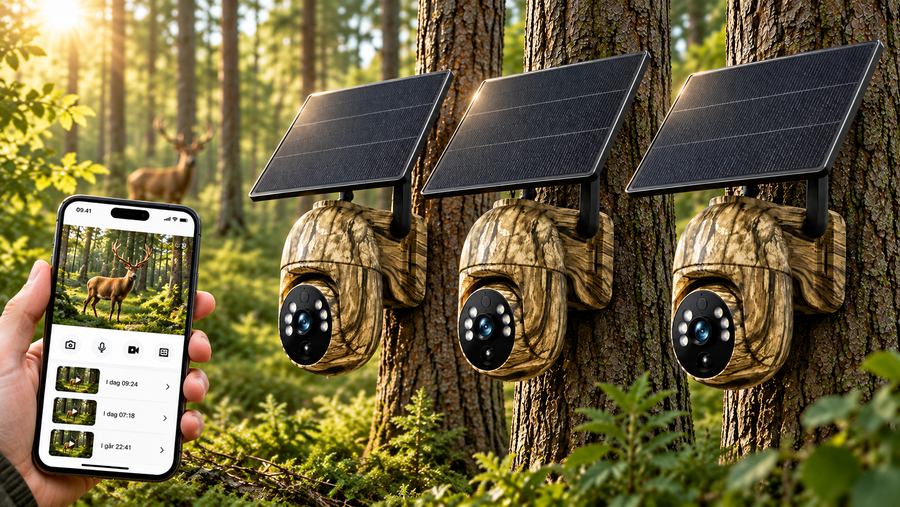
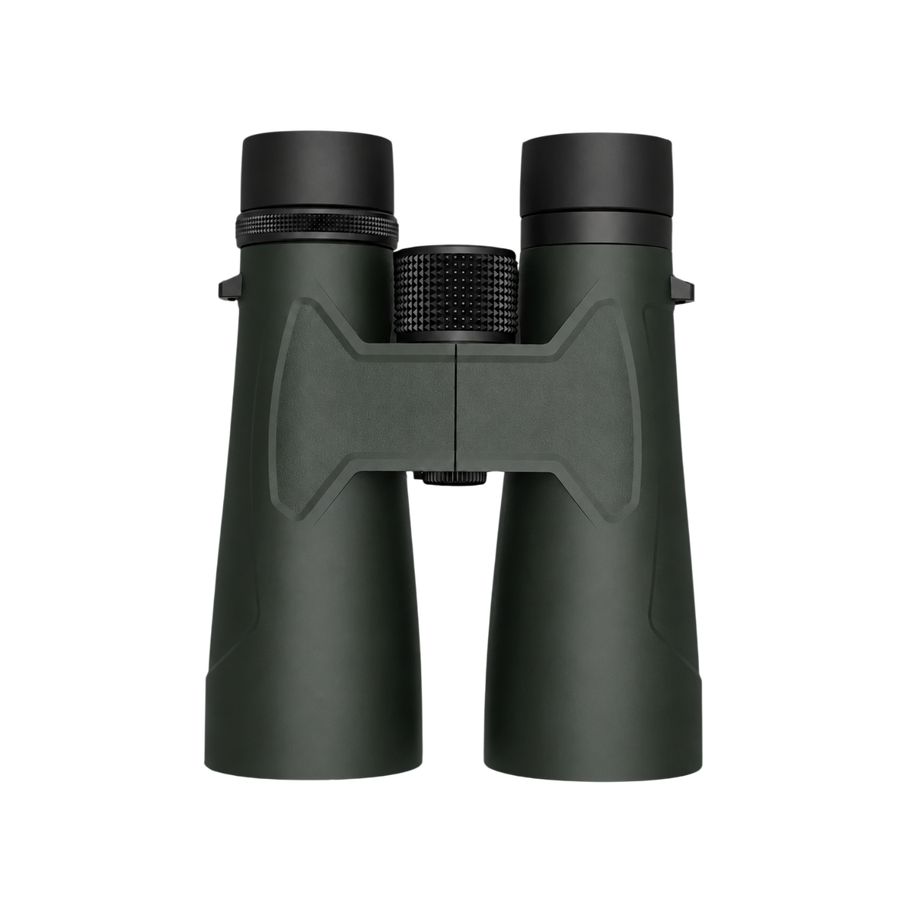
If you want to observe and identify game at a distance, you can see our binoculars for hunting and laser rangefinder. To monitor activity in the territory when you are not present yourself, you will find our game cameras. If you are in doubt about model choice, you can also read our guides to 10×42 vs. 10×50 vs. 12×50 and choosing a HuntLive camera.